Can Vitamins Boost Testosterone? Top Nutrients for Men
Learn which vitamins may support healthy testosterone levels, how deficiencies affect hormone health, and what science reveals.

Best Vitamins for Testosterone Support: What the Research Says
Testosterone plays a critical role in men's health. It influences libido, muscle growth, energy levels, mood, bone strength, and overall wellbeing. Because testosterone naturally declines with age, many men search for ways to support healthy hormone levels and maintain optimal health.
One common area of interest is nutrition. Certain vitamins and minerals play important roles in hormone production, metabolic health, and bodily processes that may influence testosterone levels. While no vitamin can guarantee a dramatic increase in testosterone, deficiencies in key nutrients may contribute to lower hormone production in some individuals.
This has led many men to wonder which vitamins are most important for testosterone support and whether supplements can help improve hormone health.
The answer is more nuanced than many supplement advertisements suggest. Some vitamins have stronger scientific support than others, and supplementation is generally most beneficial when correcting an existing deficiency.
In this guide, we'll examine the best vitamins for testosterone support, what current research says, and how nutrition fits into an overall strategy for maintaining healthy hormone levels.
Quick Answer
Several vitamins and minerals may help support healthy testosterone levels, particularly when deficiencies are present. Vitamin D, zinc, magnesium, and certain B vitamins are among the nutrients most commonly associated with testosterone production and overall hormone health. However, supplements are not a substitute for medical evaluation when symptoms of low testosterone are present.
Why Nutrition Matters for Testosterone
Hormone production depends on numerous biological processes that require adequate nutrition.
The body relies on vitamins, minerals, healthy fats, protein, and other nutrients to support:
Hormone synthesis
Energy production
Muscle maintenance
Metabolic function
Reproductive health
Poor nutrition can contribute to deficiencies that may negatively affect overall health and potentially influence testosterone levels.
While nutrition is only one piece of the puzzle, it remains an important factor in supporting long-term hormone health.
Vitamin D and Testosterone
Vitamin D is often one of the first nutrients discussed when talking about testosterone support.
Unlike many vitamins, vitamin D functions more like a hormone within the body and plays a role in numerous physiological processes.
Research has shown that men with low vitamin D levels are sometimes more likely to have lower testosterone levels as well.
Vitamin D supports:
Immune health
Bone strength
Muscle function
Hormone regulation
Sunlight exposure, fortified foods, fatty fish, and supplements can help increase vitamin D levels when necessary.
Because vitamin D deficiency is relatively common, testing may be beneficial for some individuals.
Zinc and Testosterone Production
Zinc is an essential mineral involved in hundreds of enzymatic processes throughout the body.
It plays an important role in:
Testosterone production
Immune function
Cell growth
Reproductive health
Research suggests that zinc deficiency may negatively affect testosterone levels.
However, supplementing with zinc beyond recommended amounts does not necessarily increase testosterone in individuals who already have adequate zinc levels.
Foods rich in zinc include:
Oysters
Beef
Poultry
Beans
Nuts
Dairy products
Maintaining adequate zinc intake is generally more important than taking excessive doses.
Magnesium and Hormone Health
Magnesium is another mineral frequently associated with testosterone support.
Magnesium contributes to:
Muscle function
Nerve function
Sleep quality
Energy production
Metabolic health
Some research suggests magnesium may help support healthy testosterone levels, particularly in physically active individuals.
Magnesium-rich foods include:
Leafy greens
Nuts
Seeds
Whole grains
Legumes
Because magnesium deficiency can occur in some populations, ensuring adequate intake may benefit overall health and wellness.
B Vitamins and Testosterone Support
B vitamins play important roles in energy metabolism and overall health.
While they may not directly boost testosterone levels, they support bodily functions that influence overall wellbeing.
Key B vitamins include:
Vitamin B6
Vitamin B6 supports hormone regulation and numerous metabolic processes.
Vitamin B12
Vitamin B12 contributes to:
Red blood cell production
Energy metabolism
Nervous system health
Deficiencies may contribute to fatigue and reduced energy levels.
Maintaining adequate levels supports overall health and performance.
Can Supplements Increase Testosterone?
Many supplement companies market products claiming to dramatically increase testosterone.
In reality, the evidence is often mixed.
Supplements may be most helpful when they correct a deficiency that is contributing to low hormone production.
However, supplements are unlikely to produce substantial increases in testosterone if nutrient levels are already adequate.
Men experiencing symptoms of low testosterone should consider medical evaluation rather than relying solely on supplements.
Lifestyle Factors That Support Testosterone
Nutrition works best when combined with healthy lifestyle habits.
Strategies that may support healthy testosterone levels include:
Regular exercise
Strength training
Adequate sleep
Stress management
Maintaining a healthy body fat percentage
Limiting excessive alcohol consumption
These factors often have a greater impact on hormone health than supplementation alone.
Explore Treatment Options
For men experiencing erectile dysfunction or sexual performance concerns, physician-guided treatment can help identify potential causes and appropriate solutions.
Sildenafil (Generic Viagra®)
https://www.tryryn.com/products/sildenafil-generic-viagra
Sildenafil helps improve blood flow and is one of the most commonly prescribed treatments for erectile dysfunction.
Tadalafil (Generic Cialis®)
https://www.tryryn.com/products/tadalafil-generic-cialis
Tadalafil offers a longer duration of action and may provide greater flexibility for some patients.
A healthcare provider can help determine whether symptoms may be related to hormone levels, circulation, lifestyle factors, or another health condition.
Related Reading
Signs of Low Testosterone in Men
How to Test Testosterone Levels
Can Low Testosterone Cause ED?
Testosterone and Erectile Dysfunction: What's the Connection?
Does Shilajit Increase Testosterone?
Healthy Male Body Fat Percentage
Can Weight Loss Increase Testosterone?
Testosterone and Libido: Understanding the Connection
Why More Men Are Choosing Telehealth
Telehealth has made it easier than ever for men to discuss hormone health and sexual wellness concerns with licensed healthcare providers.
Benefits include:
Greater privacy
Convenient online consultations
Access to licensed healthcare providers
Treatment from home
Ongoing support
Many men appreciate the ability to address sensitive concerns without visiting a clinic in person.
Learn more about telehealth through the U.S. Department of Health and Human Services:
Frequently Asked Questions
What vitamins are best for testosterone support?
Vitamin D, zinc, magnesium, and certain B vitamins are among the nutrients most commonly associated with testosterone support.
Does vitamin D increase testosterone?
Some research suggests vitamin D may support healthy testosterone levels, particularly in individuals who are deficient.
Can zinc boost testosterone?
Correcting a zinc deficiency may help support testosterone production, but excessive supplementation is unlikely to provide additional benefits.
Do testosterone supplements really work?
Results vary. Many supplements have limited scientific evidence, and medical evaluation is important when symptoms of low testosterone are present.
Should I take vitamins for low testosterone?
A healthcare provider can help determine whether nutrient deficiencies or other factors may be contributing to symptoms.
Why Patients Choose Ryn
Ryn provides physician-guided care designed to help men address erectile dysfunction and related sexual health concerns with privacy, convenience, and evidence-based treatment options.
Physician-guided treatment plans
Convenient online consultations
Discreet care and delivery
Trusted treatment options
Ongoing support
Explore available treatments:
Sildenafil (Generic Viagra®)
https://www.tryryn.com/products/sildenafil-generic-viagra
Tadalafil (Generic Cialis®)
https://www.tryryn.com/products/tadalafil-generic-cialis
Conclusion
Nutrition plays an important role in overall hormone health, and certain vitamins and minerals may help support healthy testosterone levels when deficiencies are present. Vitamin D, zinc, magnesium, and B vitamins are among the nutrients most commonly associated with testosterone support.
While supplements may be beneficial in some situations, they are not a substitute for proper medical evaluation. If you're experiencing symptoms such as low libido, fatigue, mood changes, or erectile dysfunction, speaking with a healthcare provider can help identify the underlying cause and determine the most appropriate path forward.
TryRyn — GLP-1, Hair Loss & Sexual Wellness Personalized telehealth for GLP-1 weight loss, hair restoration, and sexual wellness. Get prescribed online and delivered to your door.
Keep reading
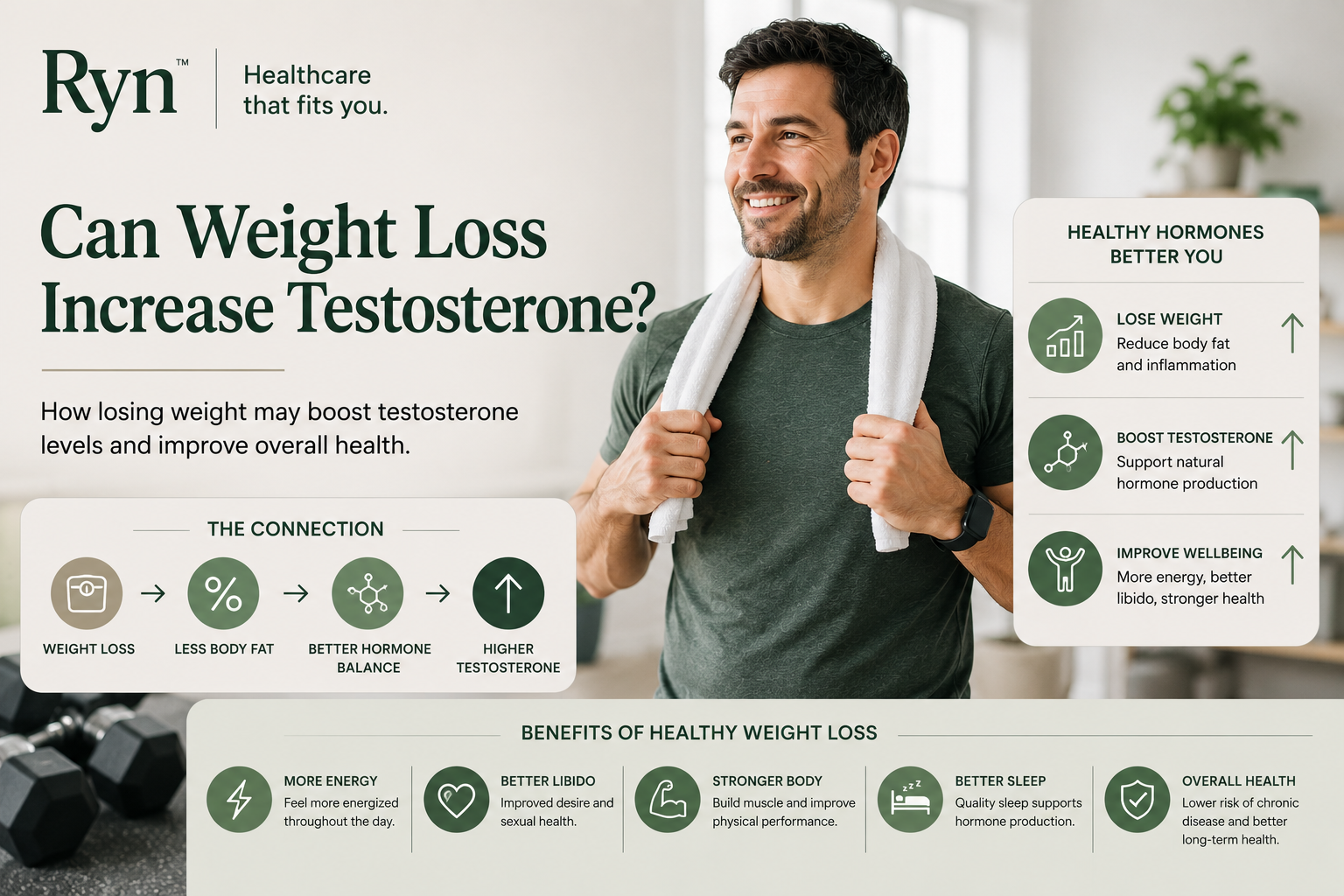
Can Weight Loss Increase Testosterone? What Research Shows
Learn how weight loss may affect testosterone levels, libido, body fat, and overall hormone health in men.
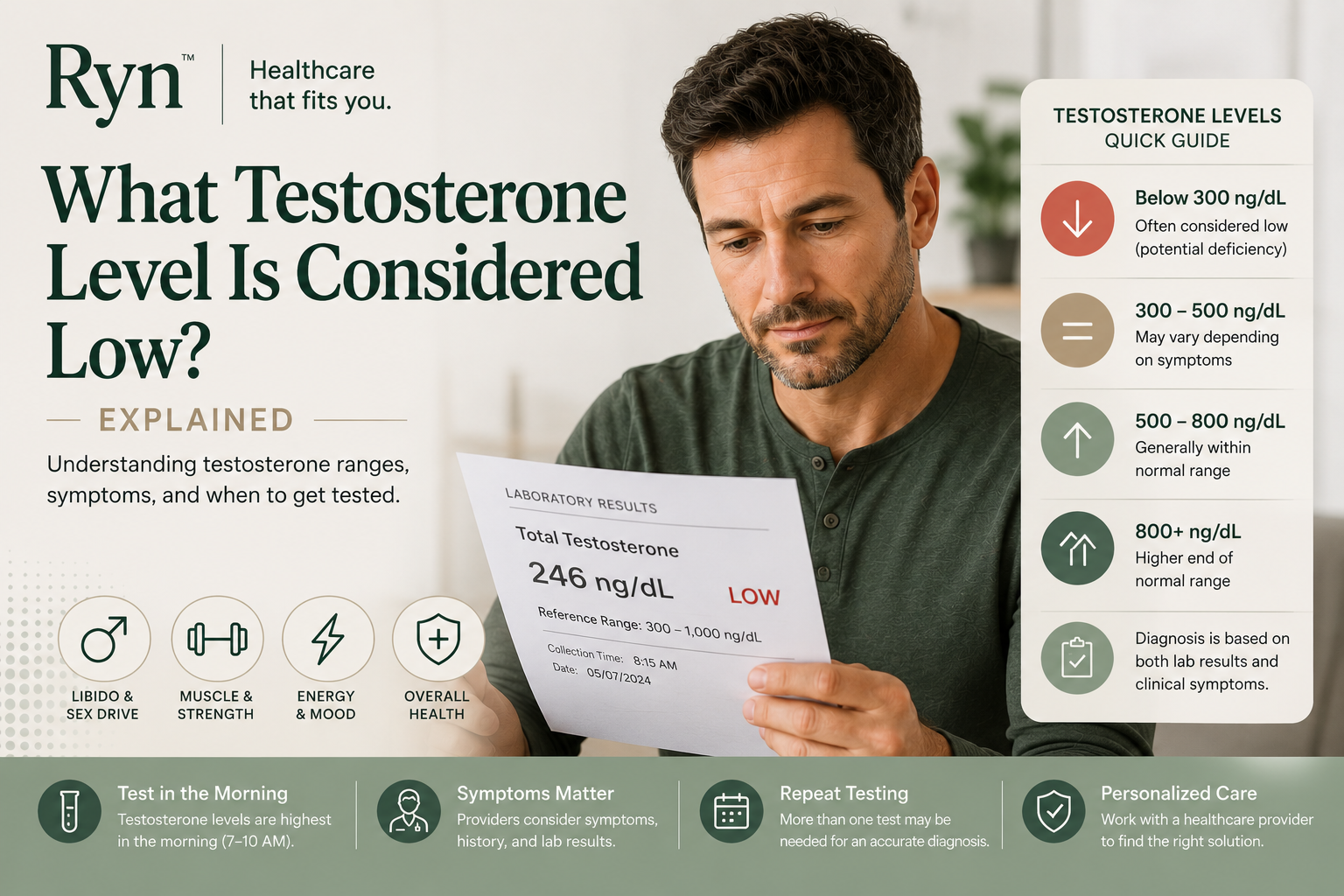
What Testosterone Level Is Considered Low? Explained
Learn what testosterone level is considered low, how providers interpret test results, common symptoms, and when to get tested.
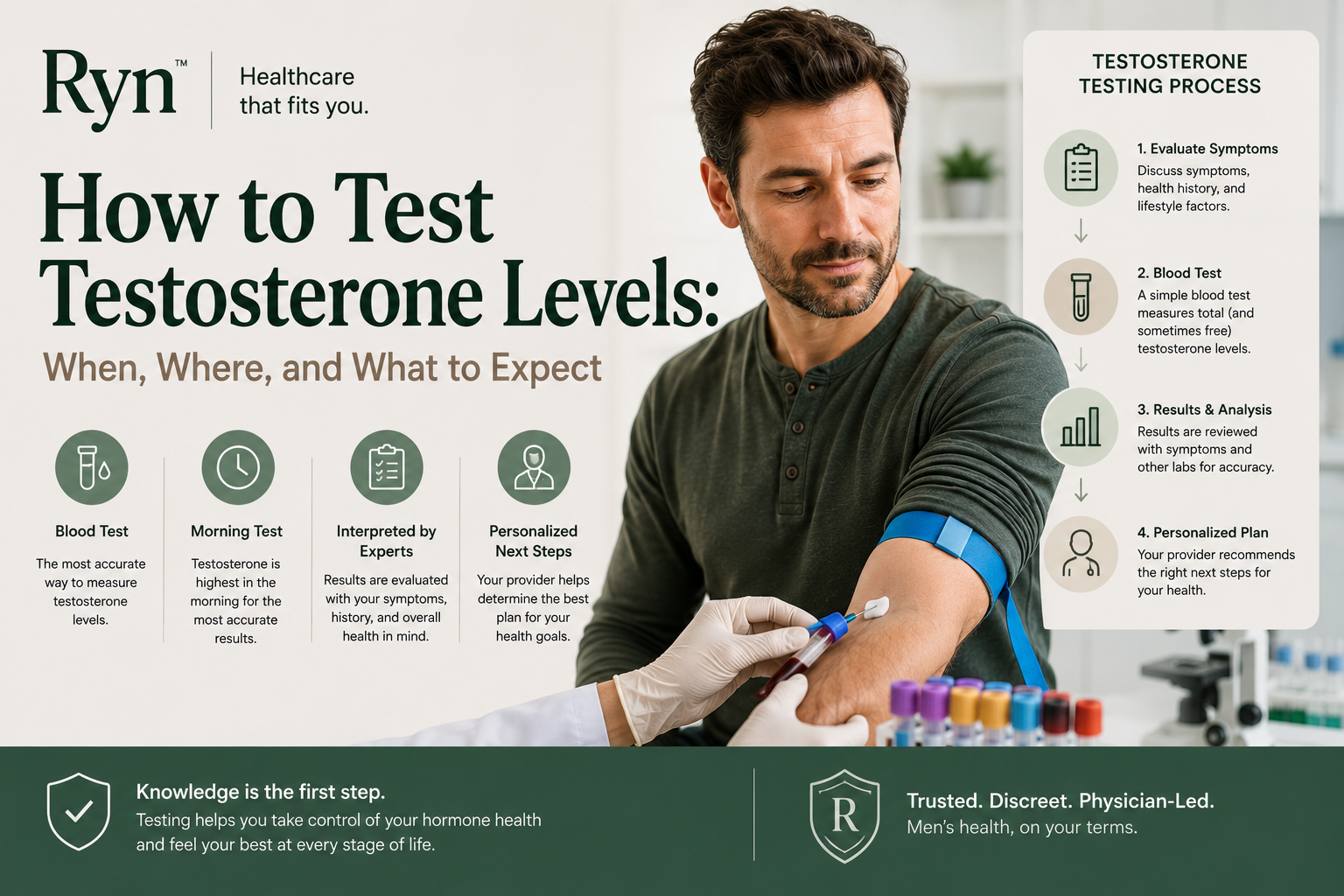
How to Test Testosterone Levels: When, Where & What to Expect
Learn how to test testosterone levels, when testing should be done, what the results mean, and when to speak with a healthcare provider.